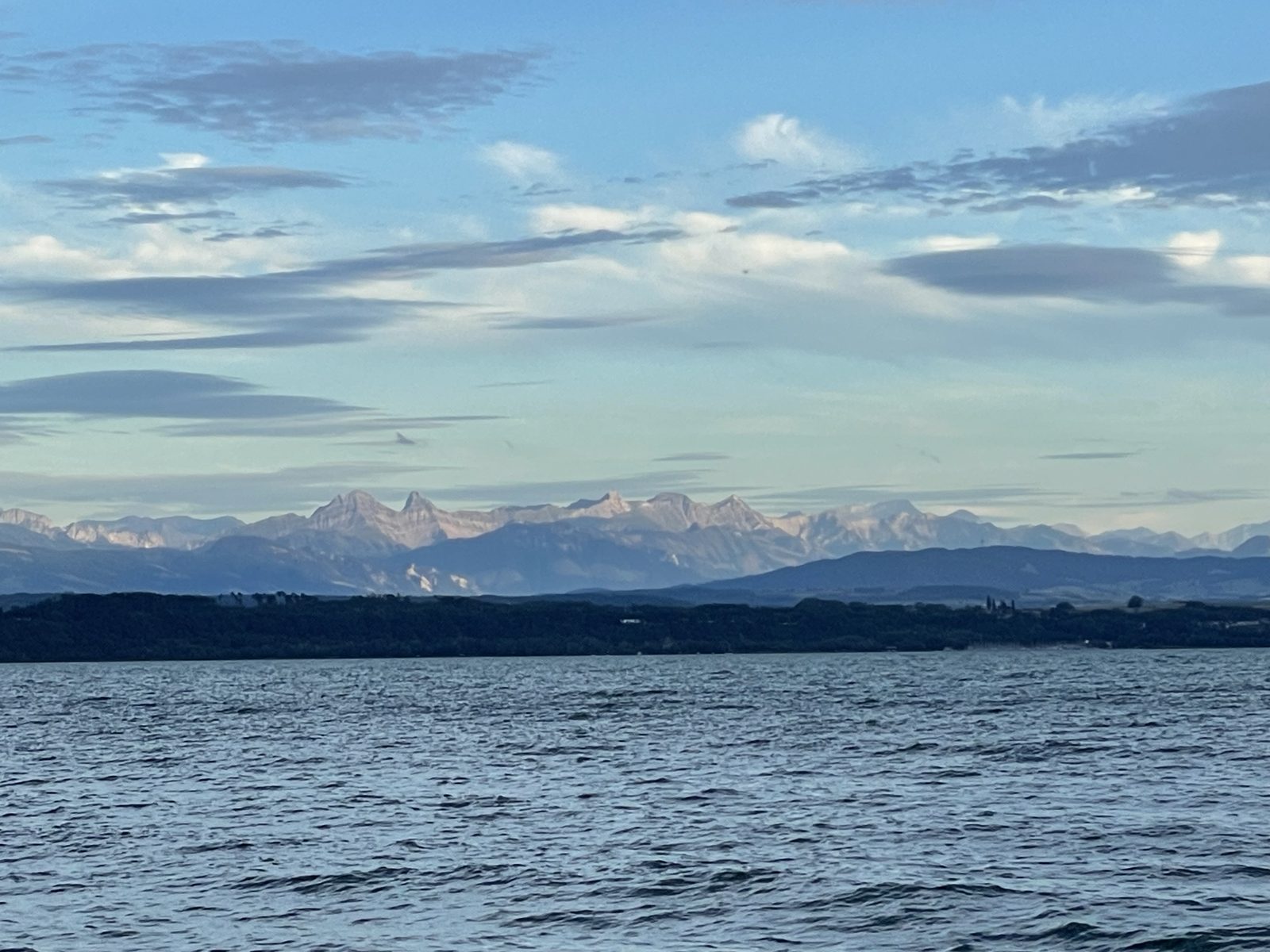
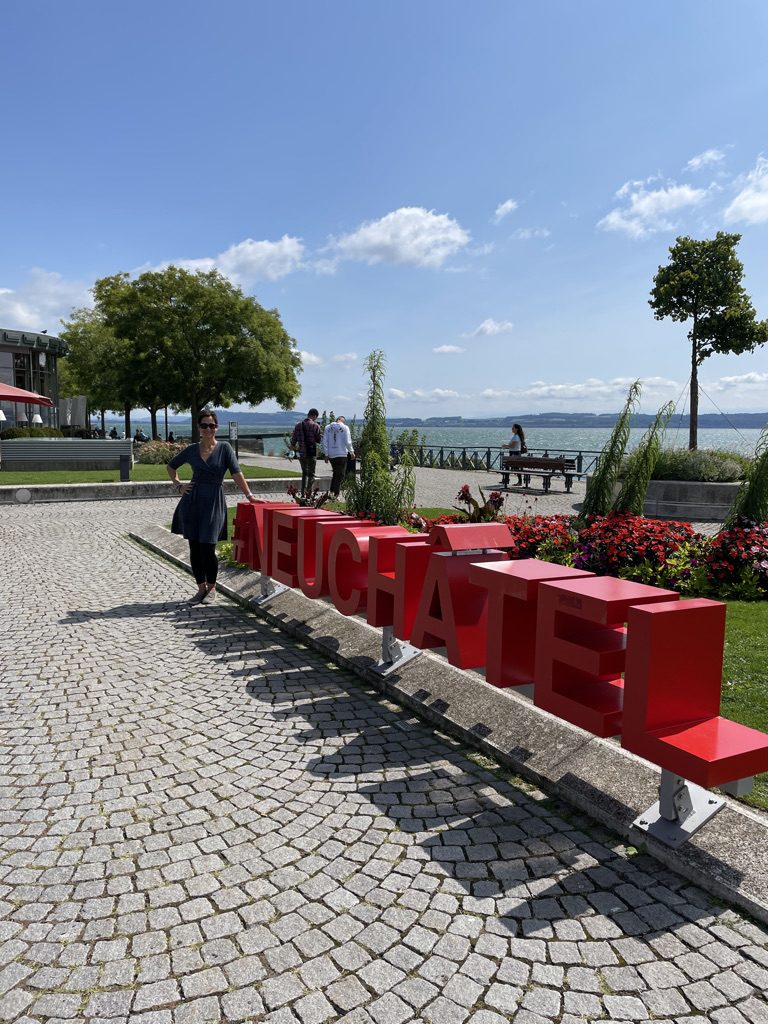
Neuchâtel sits on the shore of the largest lake entirely within Switzerland, an hour and a half by train from Zurich, with vineyards climbing the hills behind it and one of Switzerland's most spectacular hikes only twenty minutes away. We arrived on the eve of the grape harvest. Over a few days, I swam in the lake, tasted the local wines, stood at the edge of the Creux du Van's dizzying cliffs, and took one walk that did not go quite as planned!
Arriving in Neuchâtel: a balcony and a swim in the lake
After meeting my husband in Zurich, we took the train to Neuchâtel. Ninety minutes later, we were both delighted to be back in this French-speaking town on its magnificent lake.
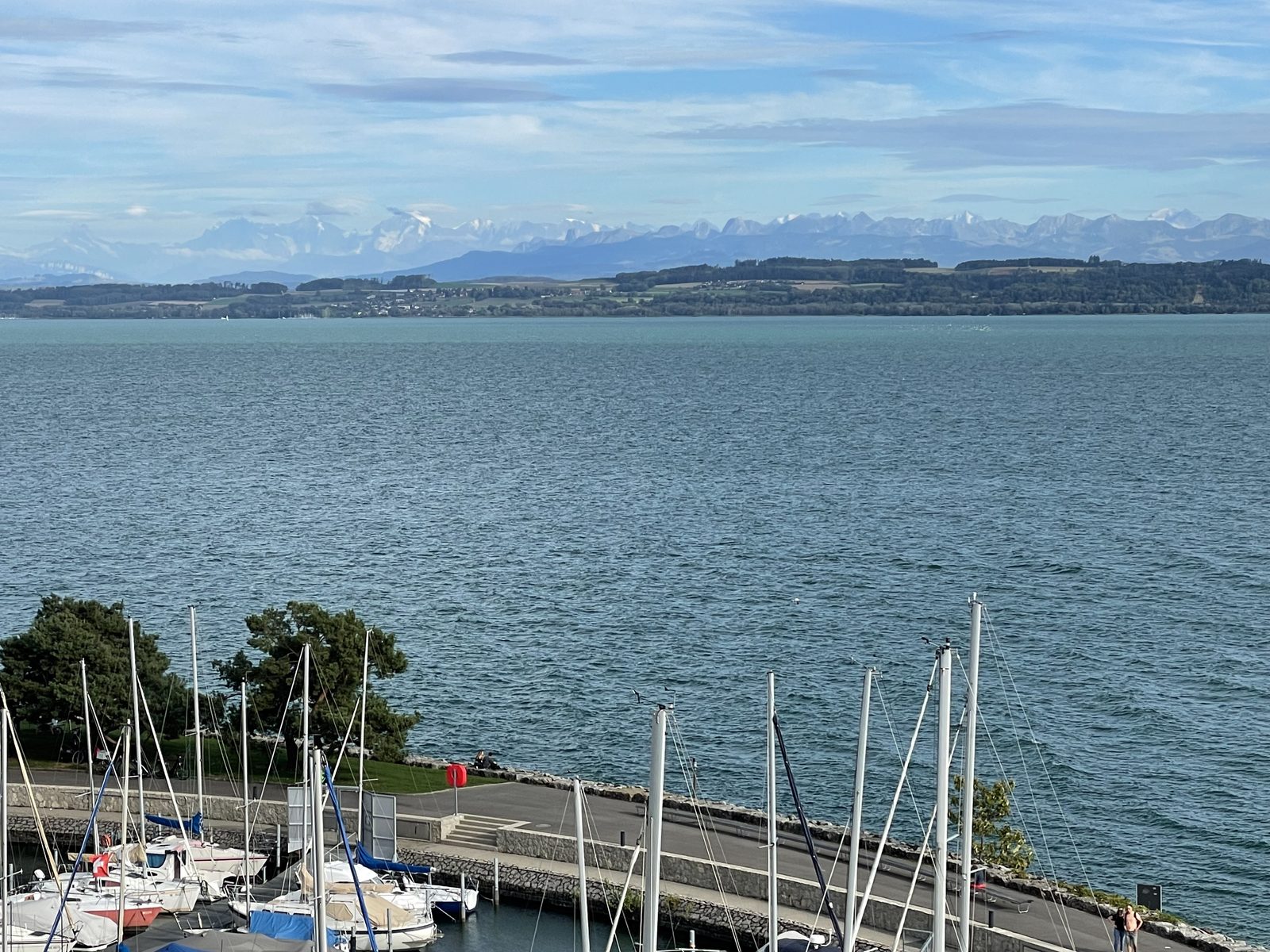
We checked in at the Hotel Beau Lac. Our room on the sixth floor had a large balcony with stunning views over the water with the Alps in the distance. Once again, the staff was welcoming and helpful. This was probably my fourth stay, and it won't be my last. And the breakfast buffet is something to look forward to!
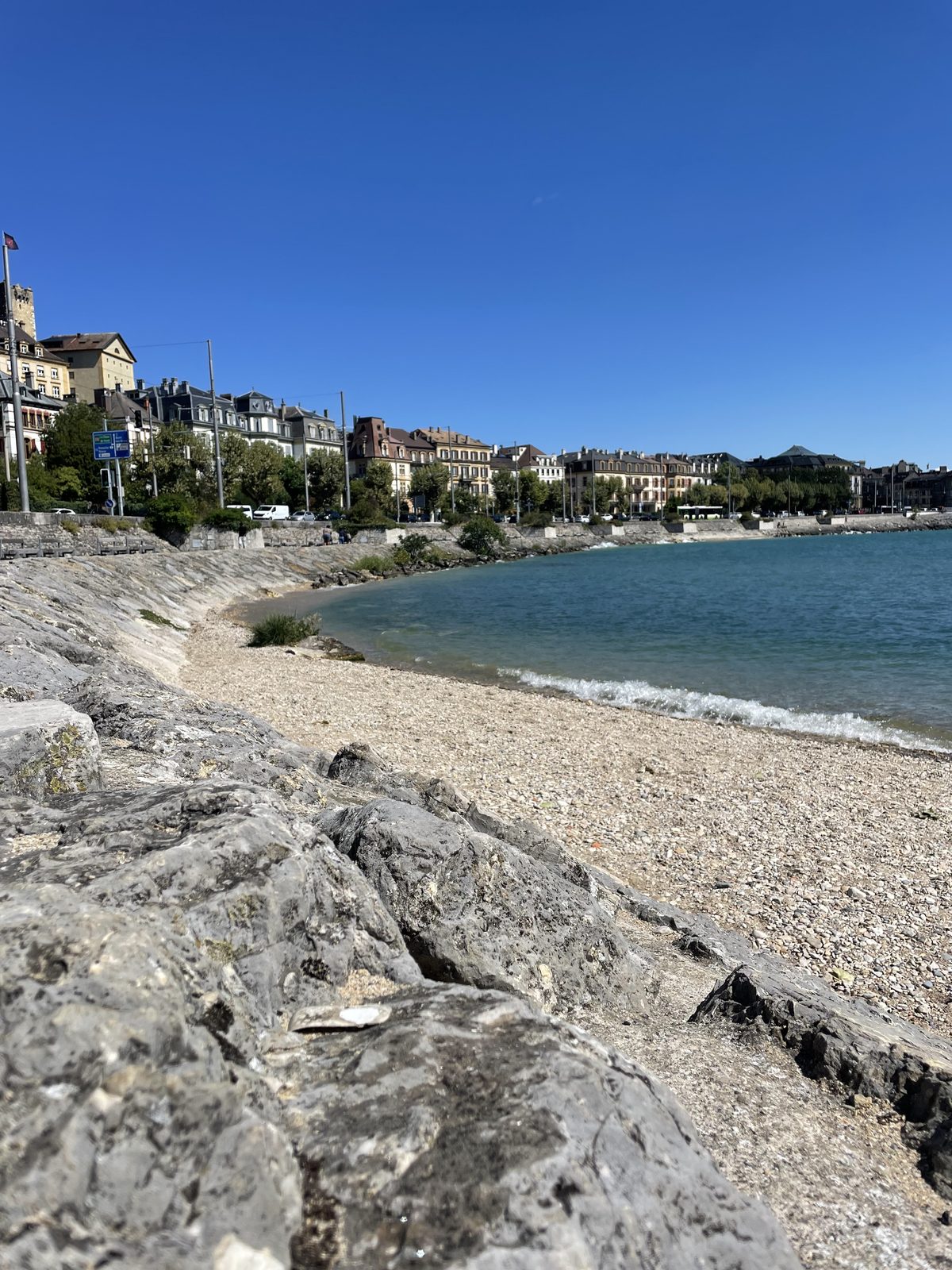
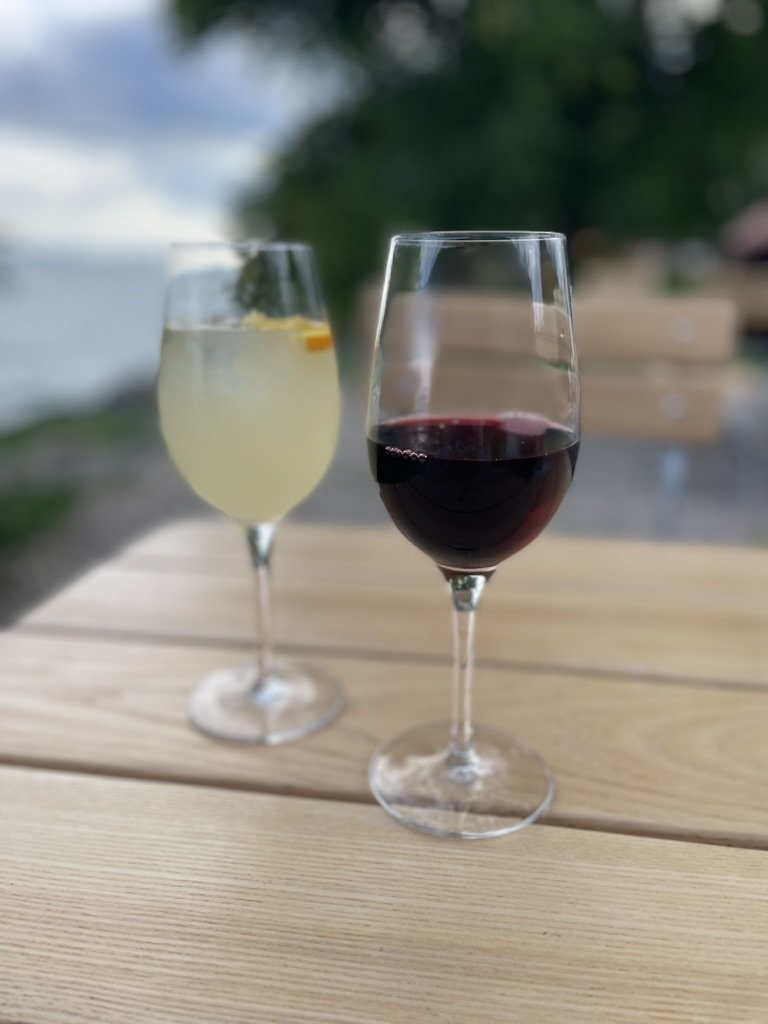
That afternoon, I swam in the delicious emerald waters of Lake Neuchâtel. The city has been improving its lakeshore for the past few years, and it isn't finished yet. Last year it added a "beach," an easy entry into the lake, with a pontoon and a floating platform, along with a modern wooden building for changing and showers. This year, a bistro opened next to it, built in the same pine-wood style. It is a lovely spot for a drink by the water.
Wine country: a cave, the harvest in Auvernier and a tasting in the old town
For dinner, we found une cave, a wine-tasting room, where we sampled regional wines with a charcuterie board.
The next morning, we were awakened by a violent storm. It lasted most of the morning, but we didn't mind. We indulged in an almost two-hour breakfast, and no one rushed us.
Later, we took a tram to Auvernier, a charming medieval village on a hill surrounded by vineyards. For some winemakers, it was the first day of the grape harvest, les vendanges. Large crates for carrying the grapes stood waiting between the vines, and the smell took me straight back to my childhood, in a small village, Russin, surrounded by vineyards on the outskirts of Geneva. I remember the excitement of the harvest, a whole village effort at the start of the school year.
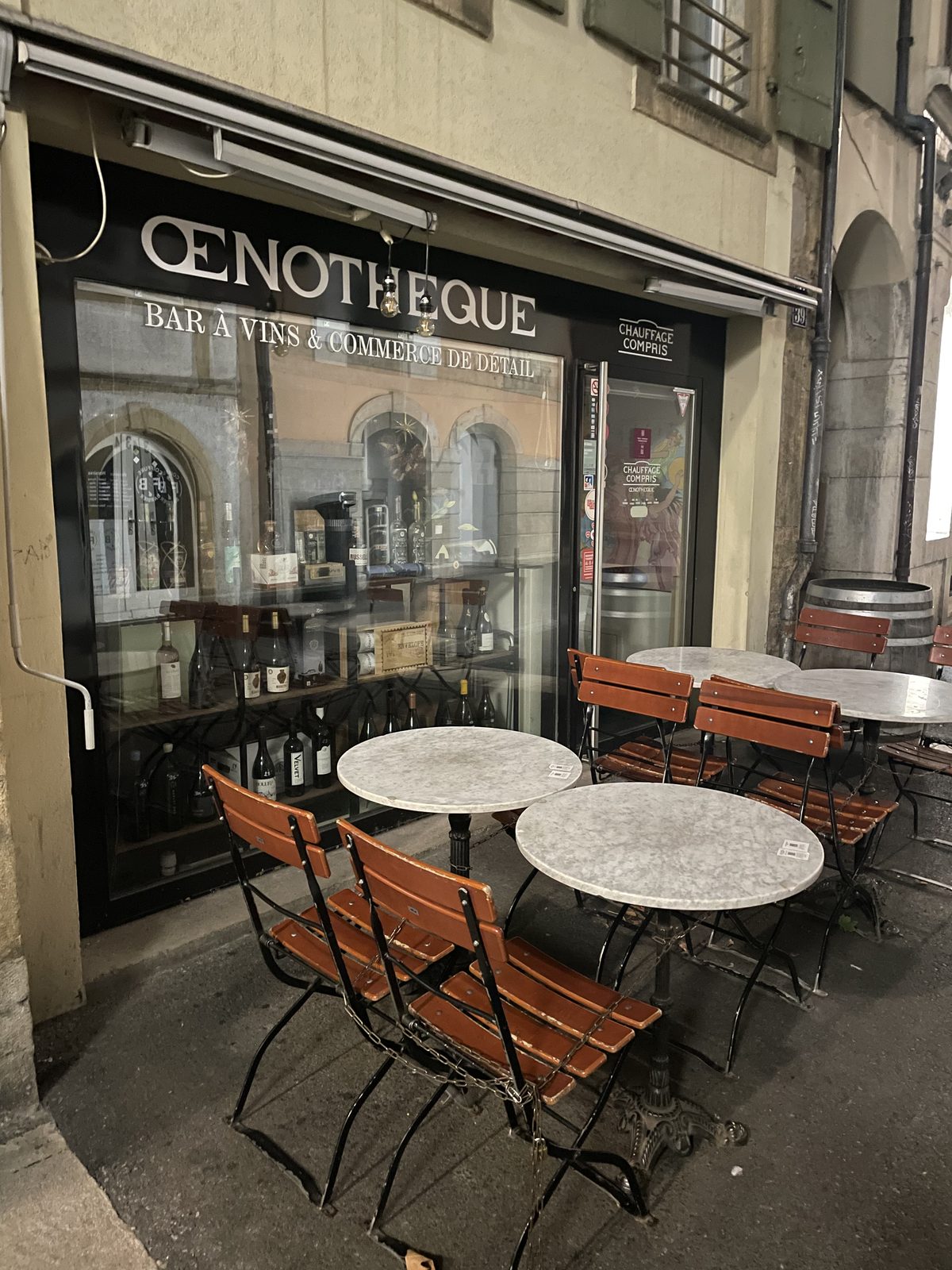
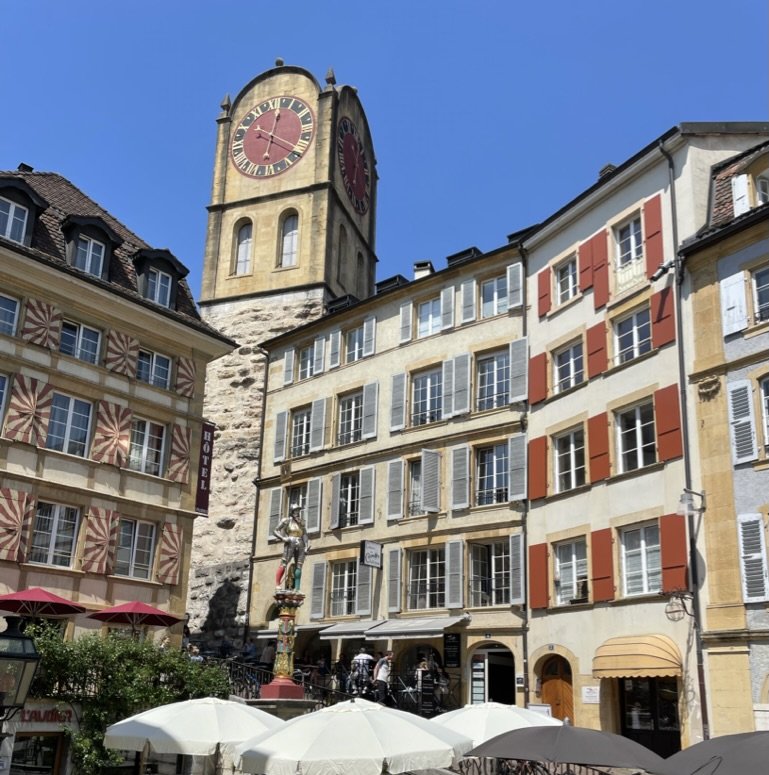
That evening, we tasted local wines in the historic center. The place was unpretentious and low-key. It felt different from the more commercially driven wine tourism in the United States. At Chauffage Compris oenothèque, we were invited to simply sip, without expectation. We took a table outside and ordered a dégustation de vins. It was an unhurried and pleasurable experience. Paulo, the down-to-earth manager and wine aficionado, gave us an overview of the local wine production: the different soils according to altitude, the different grape varieties, and how this year's high temperatures had affected the grape harvest. The key wines are Chasselas (filtered and unfiltered), Pinot Noir and Œil-de-Perdrix, a rosé made from Pinot Noir. I heard French words I hadn't spoken in decades, like cépage (grape variety) and vendange (grape harvest)!
Great apes in the city
Neuchâtel had a surprise for me this summer: the town had been taken over by apes! Around fifteen monumental sculptures of gorillas, orangutans and chimpanzees, cast in bronze and aluminum, stood in the old town squares, beside fountains and along the lakeside paths. The exhibition, Primates, featured the work of the Bologna-based sculptor Davide Rivalta.
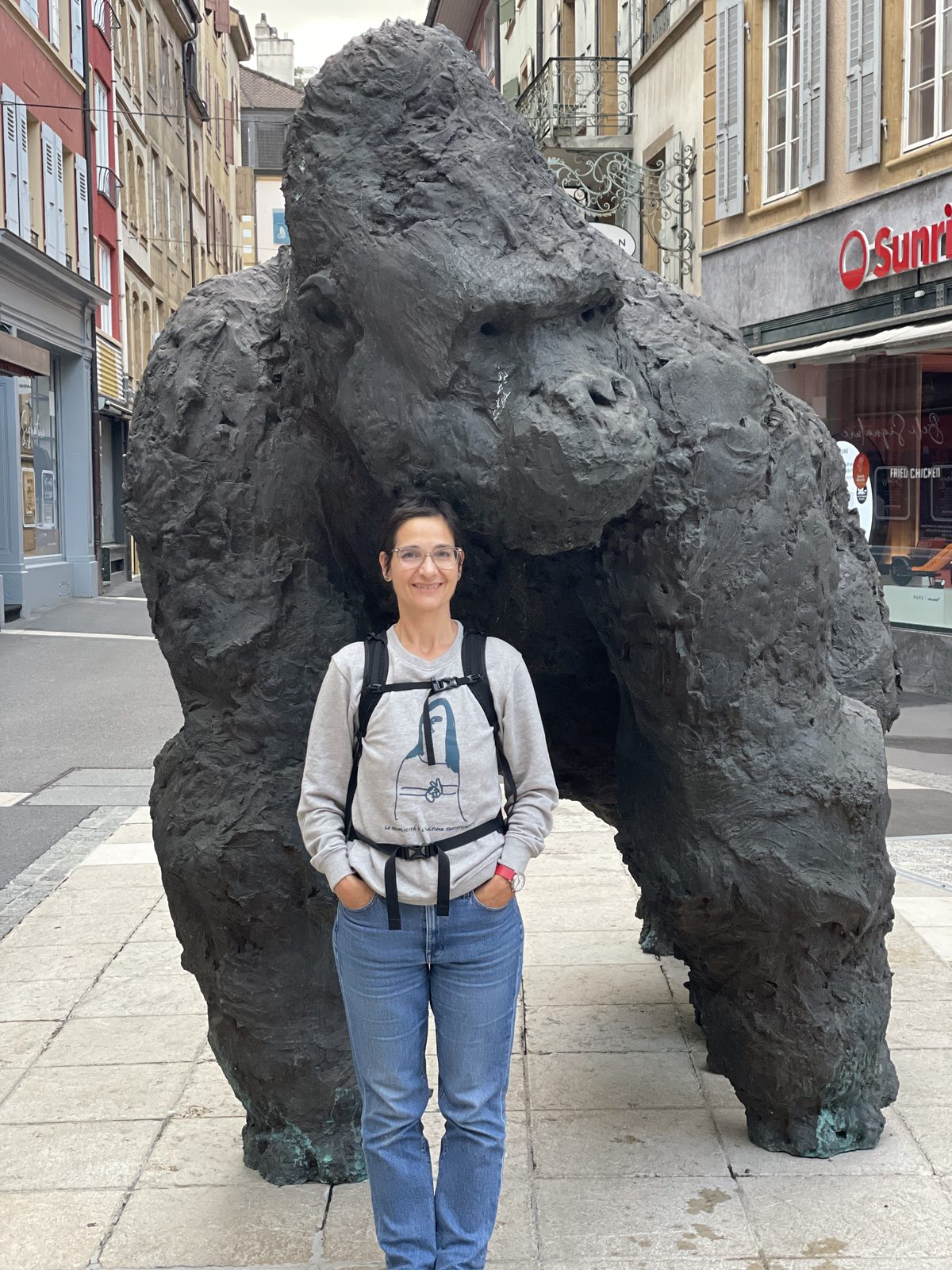
The figures are larger than life and strikingly realistic, each caught in a vivid moment. Placing wild animals in the middle of city life blurs the line between the two worlds and makes you think about how close we are to our primate cousins. The Natural History Museum and the University of Neuchâtel, whose researchers have studied primates for more than twenty years, added an exhibition on the artist's process and the science behind it.
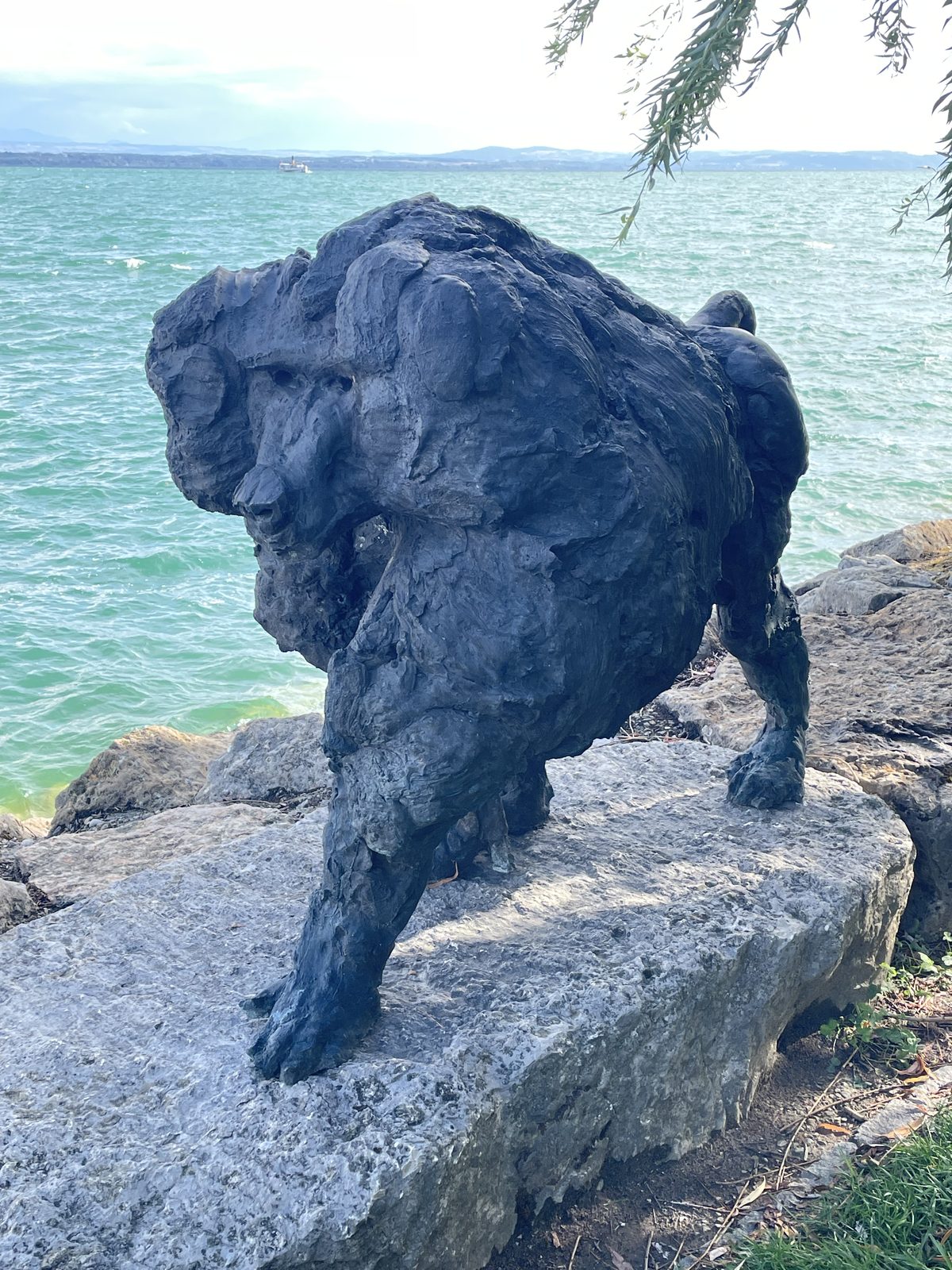
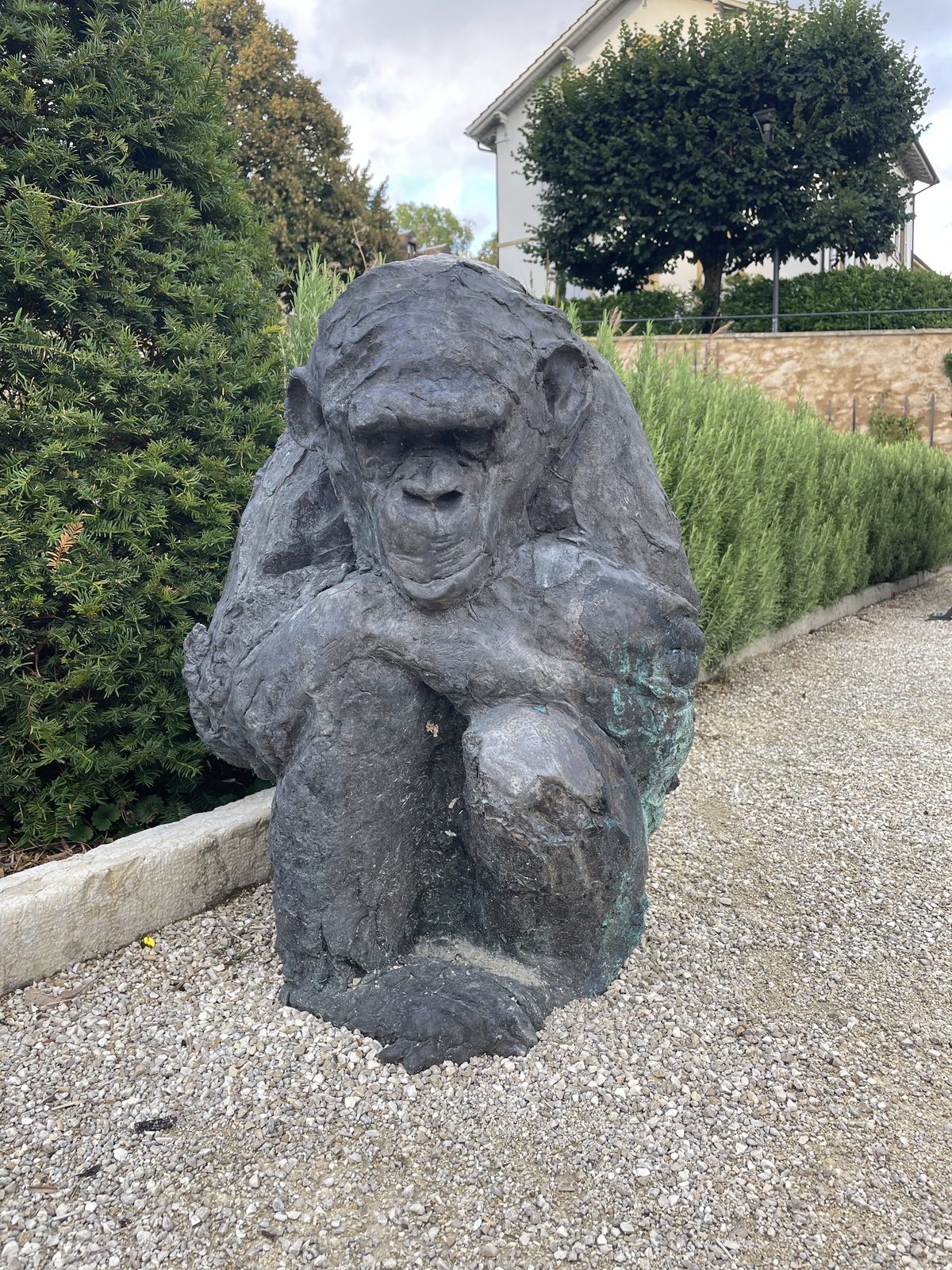
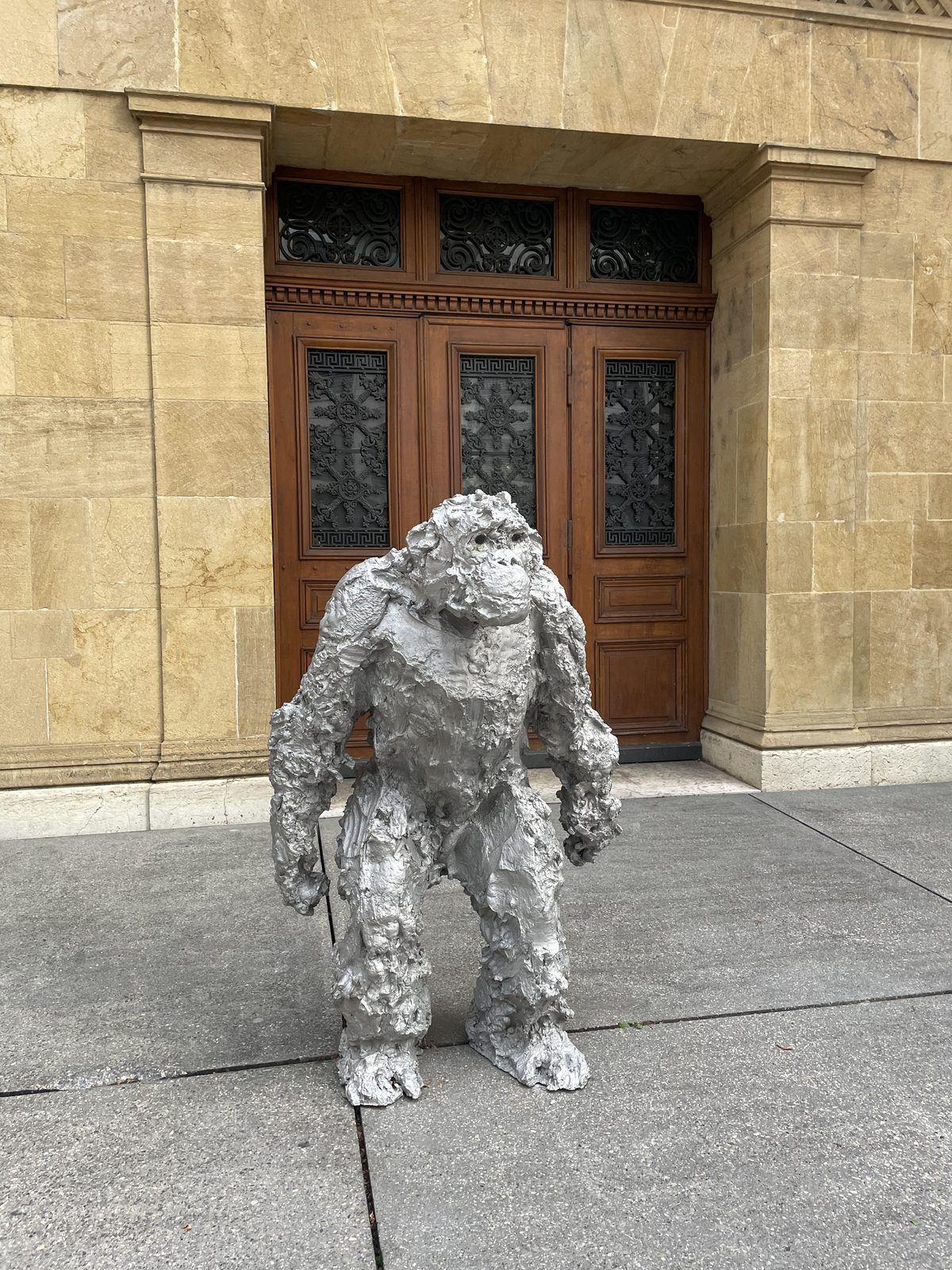
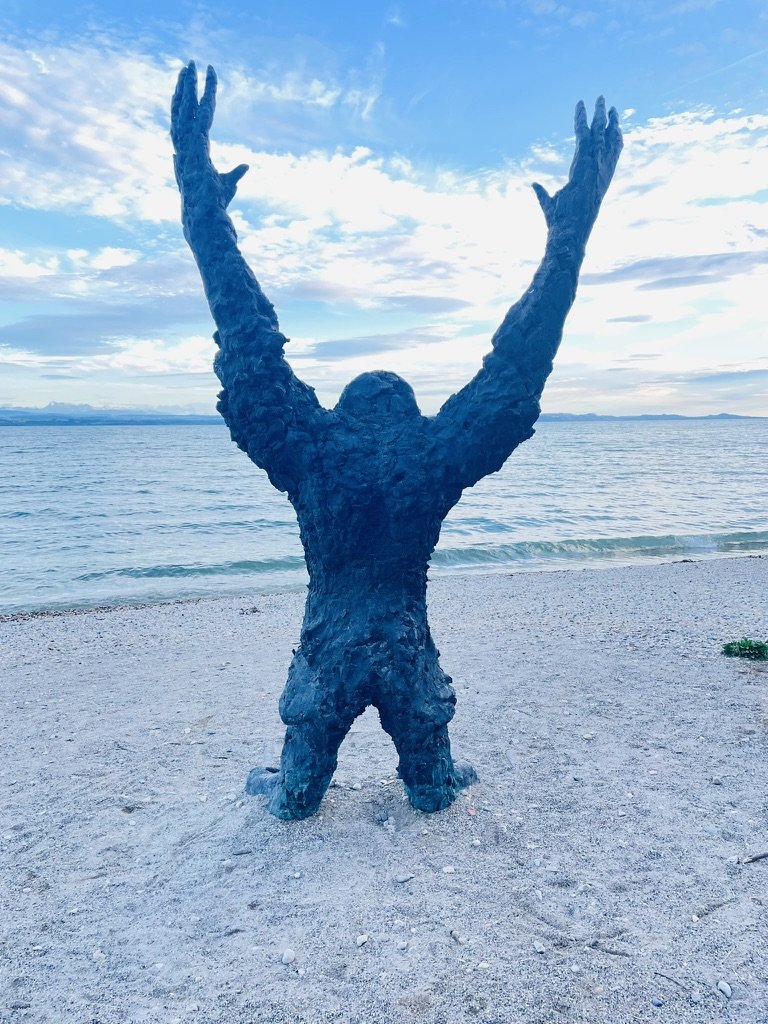
Best of all, it was free, woven into the streets and shores of the city. The exhibition ran from May 23 to September 20, 2026, and it reminded me how much a small Swiss town can surprise you.
Hiking the Creux du Van
Up the fourteen switchbacks
A regional train took us from Neuchâtel to Noiraigue in twenty minutes. The little station has a lovely shop with local foods, souvenirs and a history of absinthe, the strong spirit that was born in this valley. I was looking forward to browsing it after our hike, but it closed before 5 p.m., so I missed my chance.
Ten minutes from the station, we took the right fork onto the "14 switchbacks" trail, the Sentier des 14 Contours. It climbs over rocky paths and through the forest, and I was glad to have brought my hiking poles and sturdy boots. There were hikers of all ages on the trail. After about two hours, we crested the top and joined the others for a well-earned break. We were rewarded with our first view of the Creux du Van.
At the edge of the abyss
The Creux du Van is a natural rock amphitheater, about 1,400 meters (4,600 feet) wide, ringed by sheer white limestone cliffs up to 180 meters (about 590 feet) high, and protected as a nature reserve since 1876. Nothing else like it exists in Switzerland, and it is worth every step of the climb!
After water and pictures, we continued along the rim. The land here is private summer pasture for cows, crisscrossed by sturdy stone walls with narrow slits for hikers to slip through. It was my second time on the rim, and it was as impressive as the first. You can walk right to the edge: nothing stands between you and the drop. It is a dizzying experience.
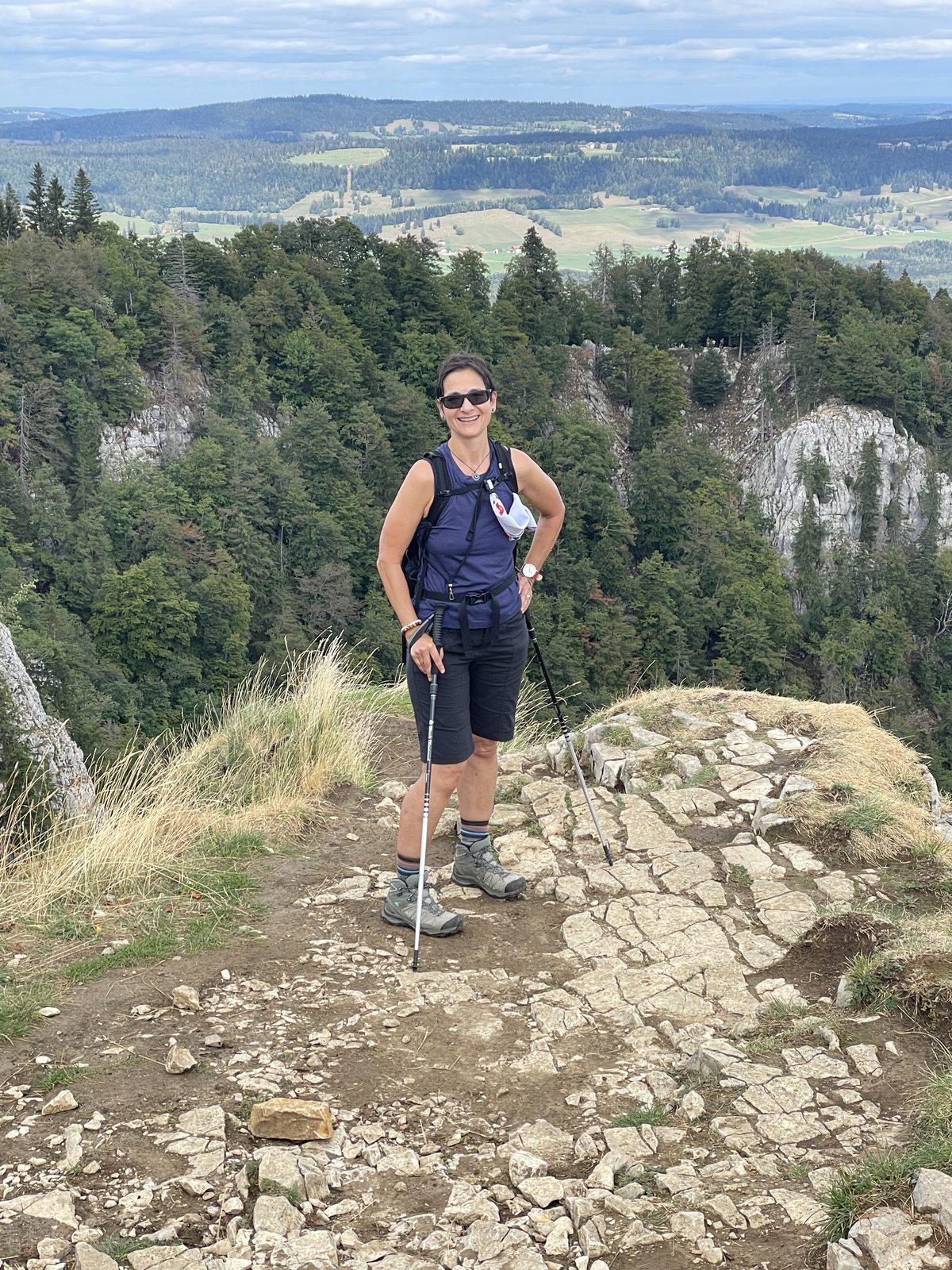
I was looking at millions of years of geological history in three dimensions. As the Alps collided with the European plate, the pressure folded and lifted the layers of the Jura Mountains. Erosion, and later the glaciers, carved those layers into the cliffs and the great horseshoe we see today. Mountains are built up by one force and taken apart by another, and here you can see both at work. The geologists Hutton and Lyell would have loved this view!
Lunch at a mountain farm
Away from the rim, we walked to Le Soliat farm for lunch. I learned it was a métairie, a word I had to look up: a traditional Jura mountain farm, historically tied to summer grazing. Le Soliat is still a working farm that raises Angus cattle, and it is open each year from April to early November. The food is simple and local: fondue, sausages, cheeses, meringues with cream, absinthe, and their famous wood-fired bread.
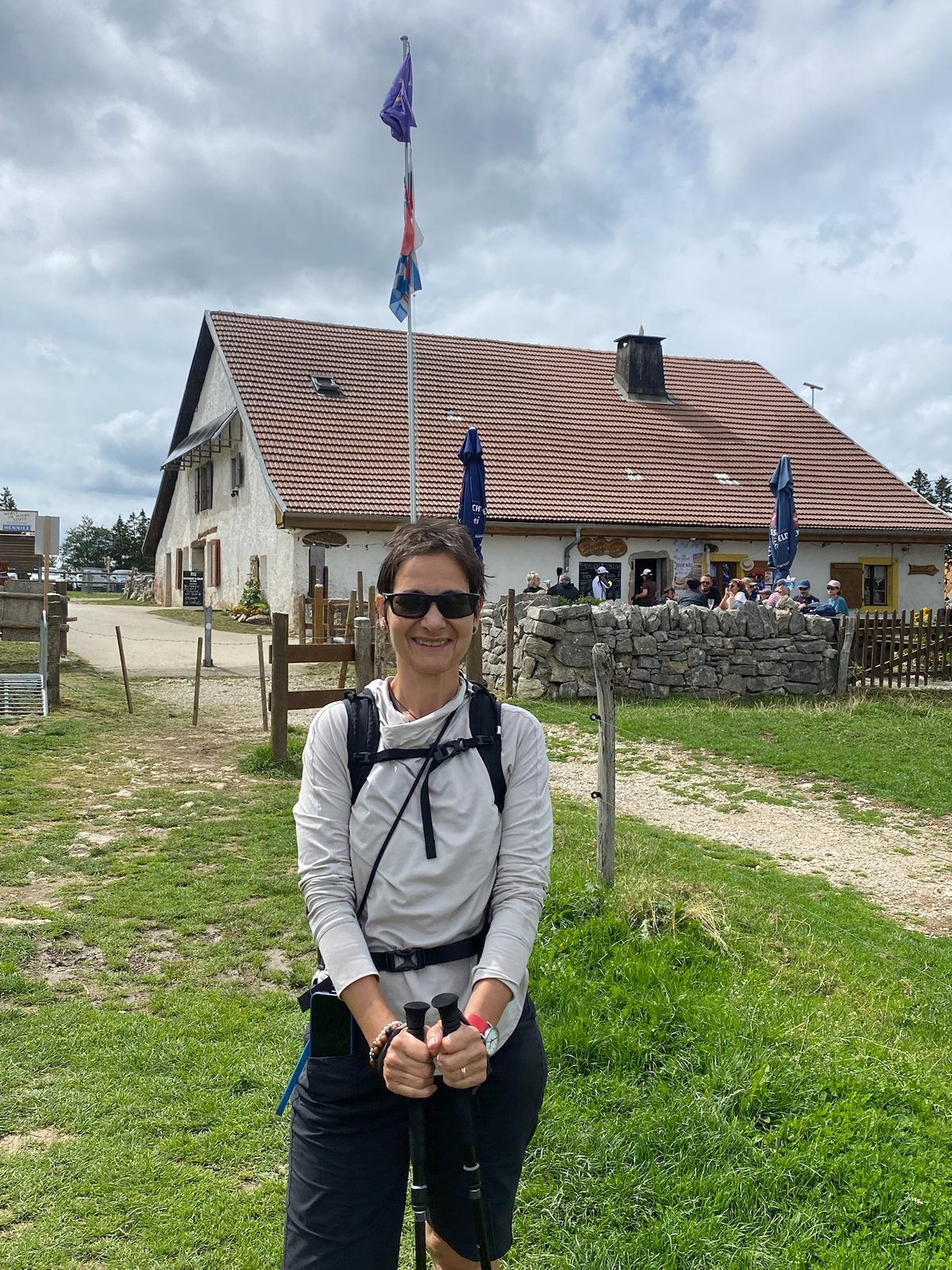
Ordering is an efficient affair, think Seinfeld season 7, episode 6. We weren't ordering soup, but after watching tourists stumble over their orders, I thought I'd better know what I wanted before I reached the counter, be ready to pay in cash, take what I was given, say whether we would sit inside or out, and swiftly take a number for our table. My husband and I sat inside, in a cozy low-ceilinged room, on benches along a long wooden table. Through the small windows, I could see one of the farmers at work.
We shared a planchette of tomme cheese, cornichons, thick slices of homemade bread and a sausage laced with absinthe. Then we indulged in a heavenly meringue topped with a generous portion of whipped cream, absinthe and berries. Beer and coffee completed the perfect post-hike lunch.
It is also possible to spend the night here, in a dormitory. It is the very definition of basic accommodation, but what an experience it must be to wake up there!
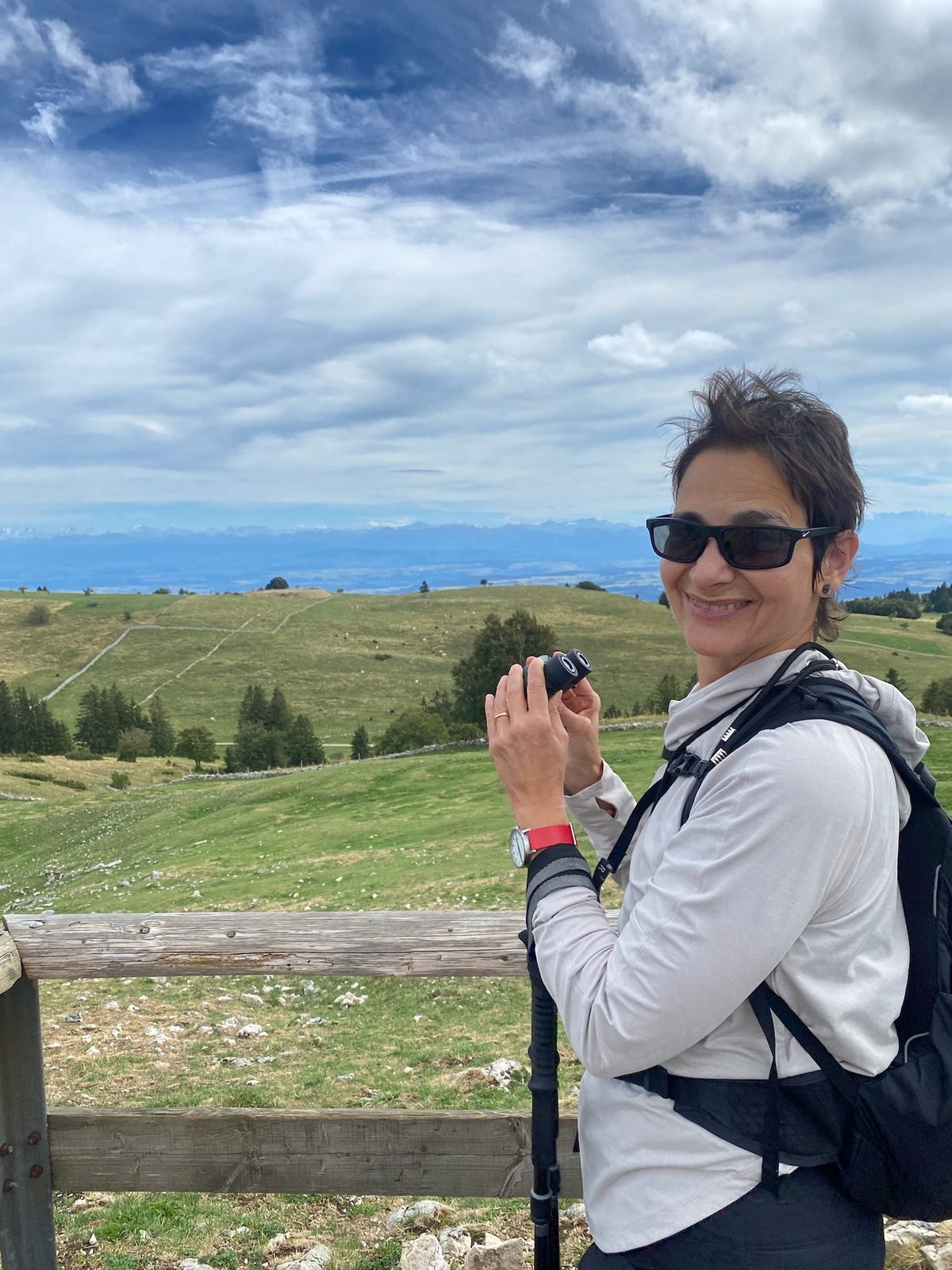
After our meal, we crossed another pasture and reached an orientation table. From where we were standing on the Jura plateau, we could pick out legendary mountains: the Jungfrau, the Eiger, the Mönch, the Titlis, the Dents du Midi and even Mont Blanc. Since we were heading to the Bernese Alps ten days later, it was special to see those famous peaks from afar.
Following the yellow diamond
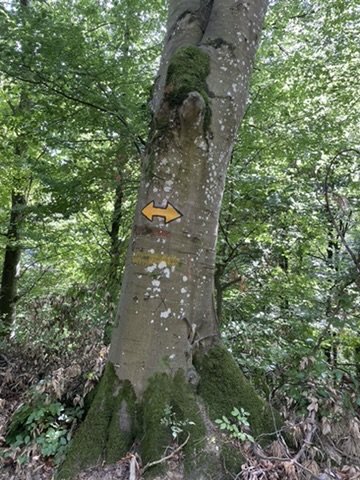
We rejoined the trail to Noiraigue, following Switzerland's distinctive yellow signs. The yellow diamond is painted on trees, rocks, posts and almost any surface (I even saw one on a trash can). There is nothing more reassuring than spotting one when you are hiking in the middle of nowhere. It simply says: you are on the right path, keep going.
On the way down, our friendly yellow diamond suddenly became white-red-white stripes. The change was not decorative. The trail narrowed and turned rocky, and it had rained violently a few days earlier, and the traces of the storm were still visible. I was glad to have brought my hiking poles! Slowly and carefully, we made our descent. Within thirty minutes, the path widened again and turned back to a leisurely yellow.
Ferme Robert and the last bear
I wanted to stop at the historic Ferme Robert, a traditional Jura farm built in 1750, at 972 meters (about 3,190 feet). Against the bright green forest, its broad, low-pitched roof and dark timber stand out. The timber upper level served as the barn, and the whitewashed stone lower level was the living quarters. Today it is a protected historic monument that welcomes hikers for meals and overnight stays, in a separate dormitory building.
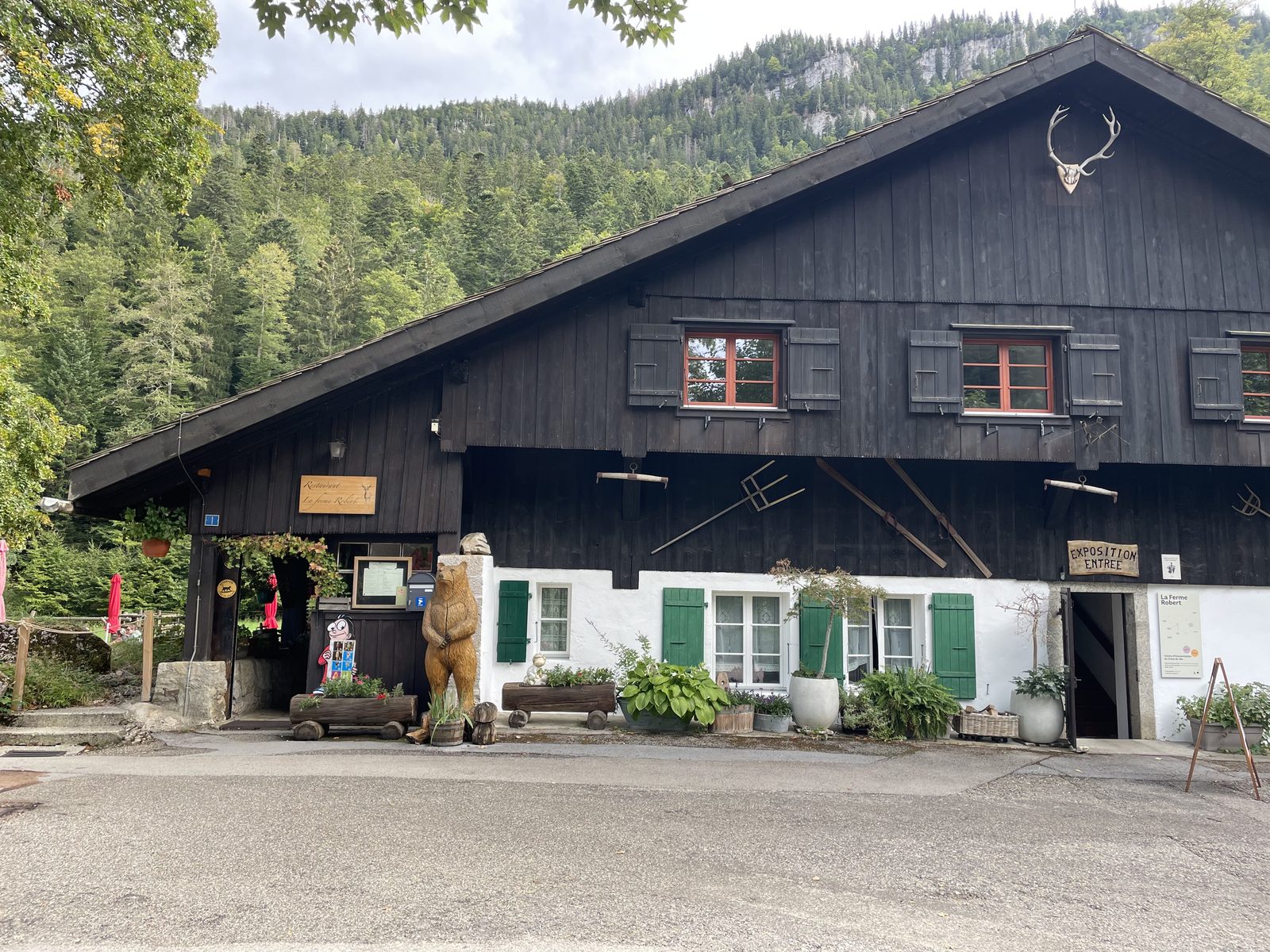
It would have been worth stopping for a meal: the dishes are made with local ingredients and are generous enough to satisfy any tired, hungry hiker, with Chasselas and Pinot Noir from nearby vineyards. But we were only tired, still full from Le Soliat. Sadly, we missed their famous dessert, a soufflé glacé à l'absinthe.
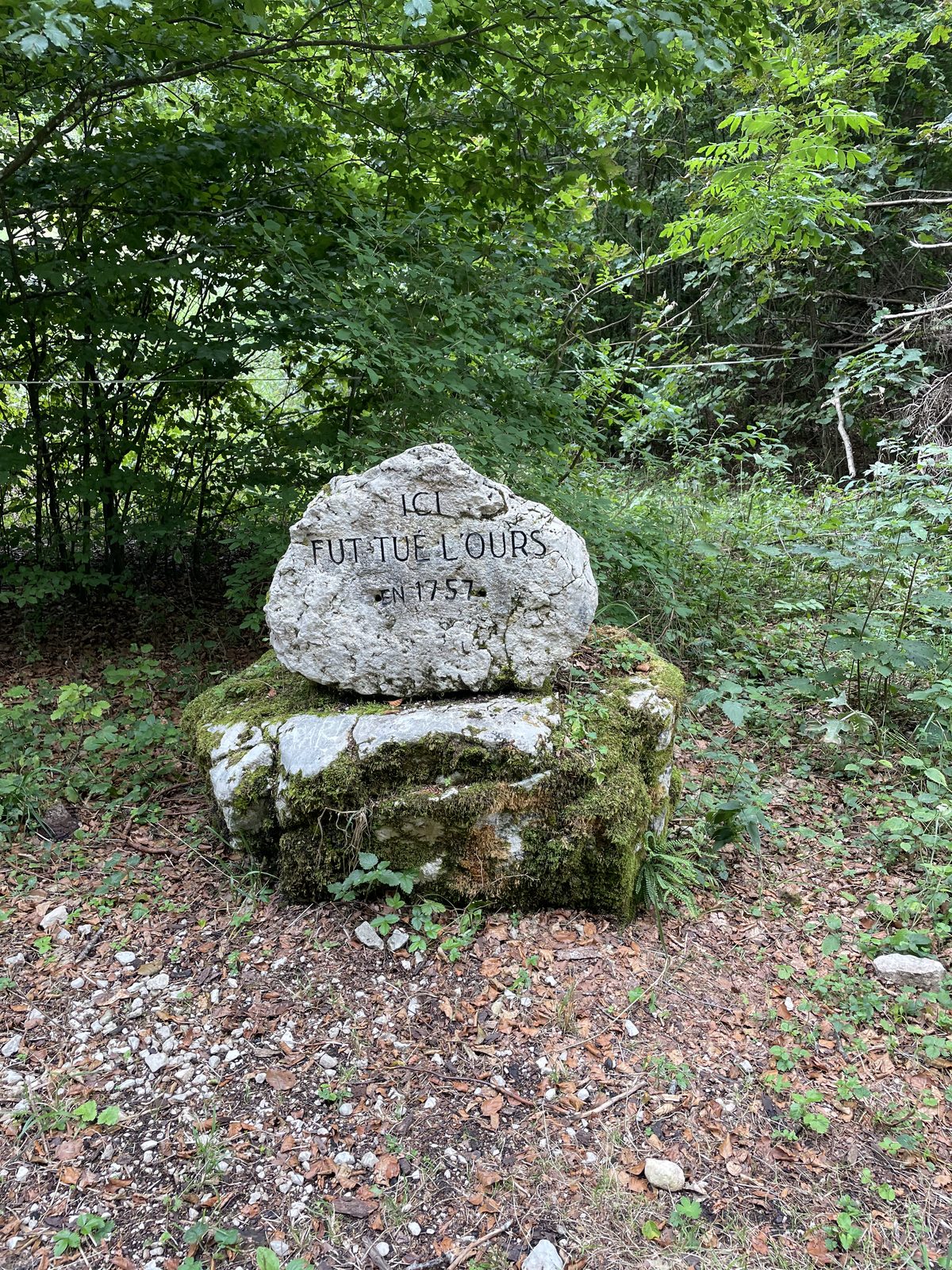
The farm is also famous for a bear. In 1757, David Robert killed what is said to be the last bear in the Neuchâtel area, and a stone marker shows where it happened. According to the story, the bear attacked while his rifle was still hanging from its strap. Robert grabbed it by the throat with one hand, keeping its jaws away from his face, and fought it with his hunting knife. Both were found exhausted and unconscious, the bear the clear loser. The local authorities rewarded him for it. It might not have been the last bear in the region, but it is a grand story!
Cressier and the walk to Saint-Blaise
A wine trail through the vines
To explore more vineyards, we took the train to Cressier, a fifteen-minute ride from Neuchâtel. The small, sleepy village sits between the lakes of Neuchâtel and Biel/Bienne, and it didn't take long to see its medieval buildings, its château, its narrow streets and its village square. One surprise: the water in the public fountains was not fit for drinking, which is unusual in Switzerland.
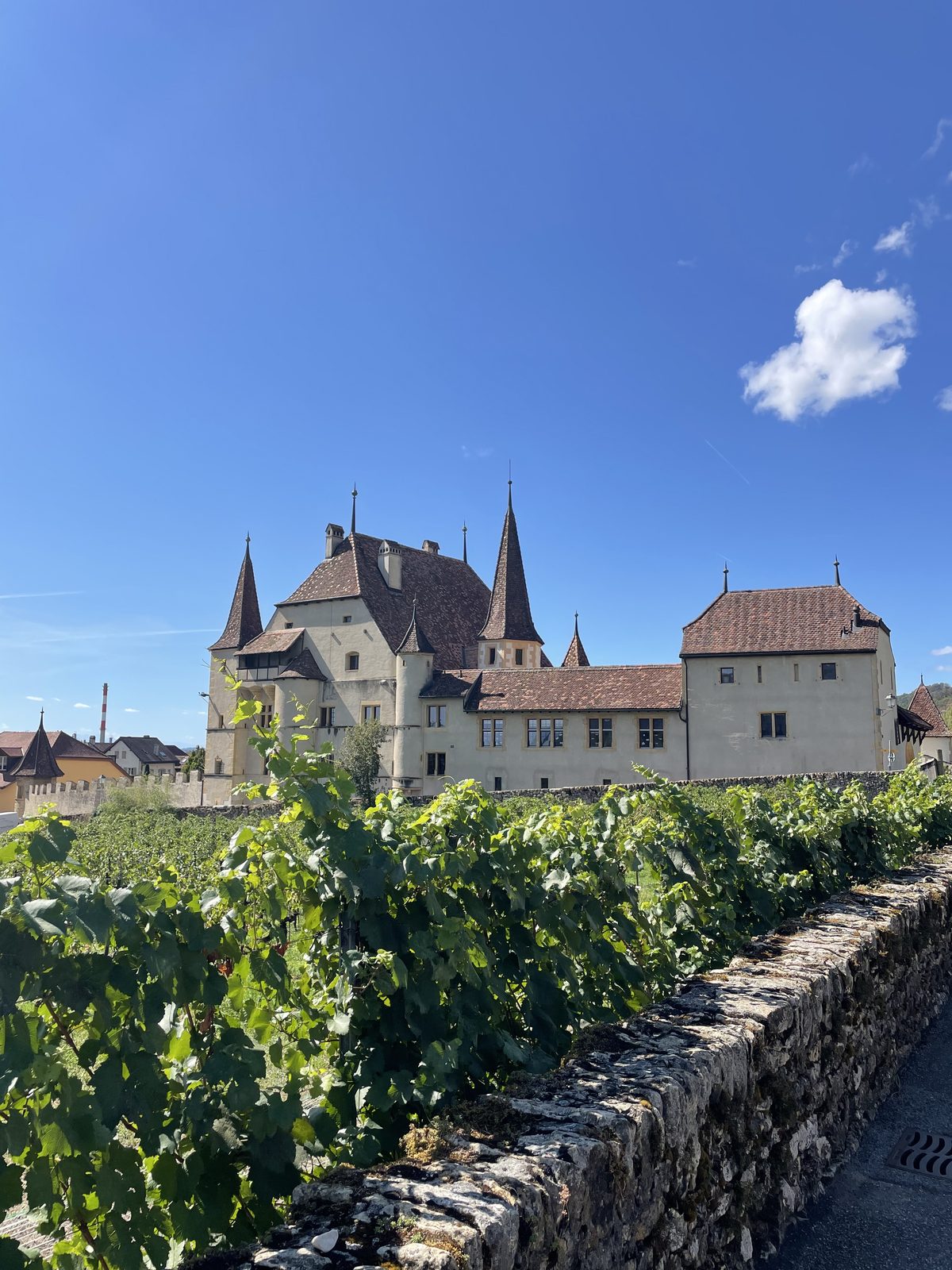
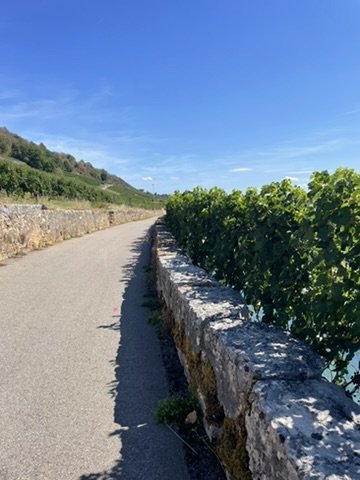
The vititour wine trail makes two loops through the vineyards, one to the west and one to the east. Twenty-seven signposts explain the local wine culture, its history, the harvest and the environment. It is possible to bike, but on foot it is easier to stop and read. It was a warm day, with beautiful views over the vines.
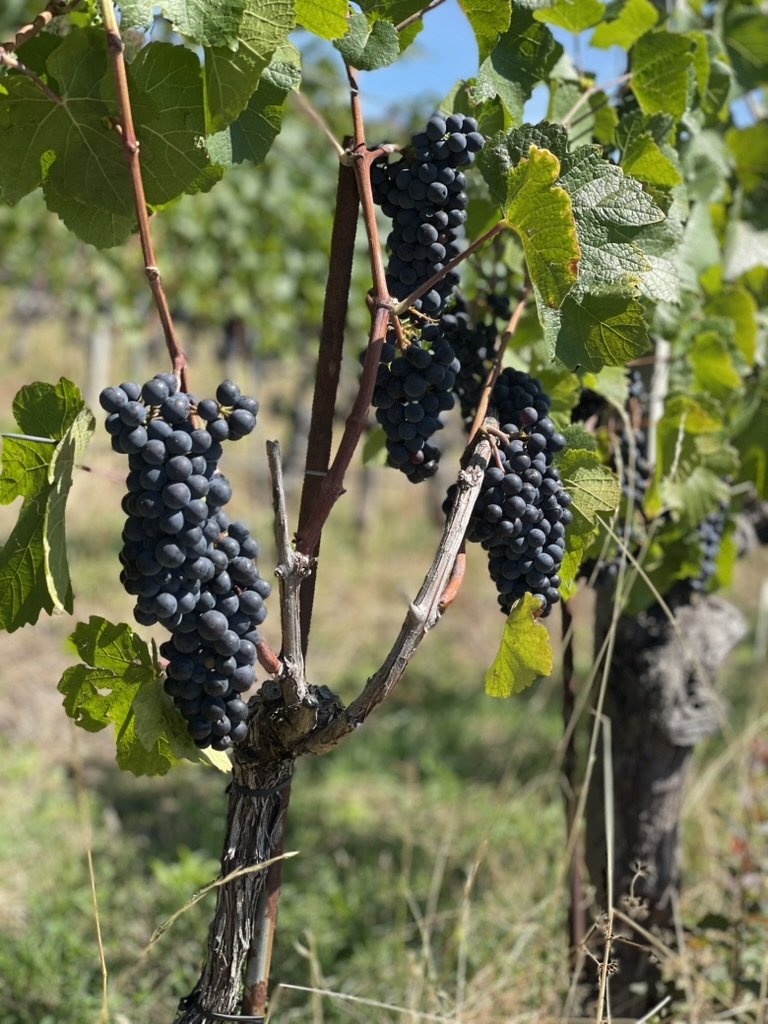
Some local wineries offer tastings, but with conditions: groups only, certain days only, not during the harvest, and sometimes with the understanding that you will buy cases of wine. Wine tasting here is very different from what I know in the United States, where visitors are welcome any day, at any time of year, and the goal is often to sell a wine club membership, something that, in my experience, is rare in Switzerland.
Do. Not. Rely. On. Assumptions.
We decided to walk from Cressier to Saint-Blaise, imagining a gentle stroll through the vineyards. Faithfully and resolutely, we followed the yellow diamonds. As I have said before but apparently not yet internalized: do not rely on assumptions.
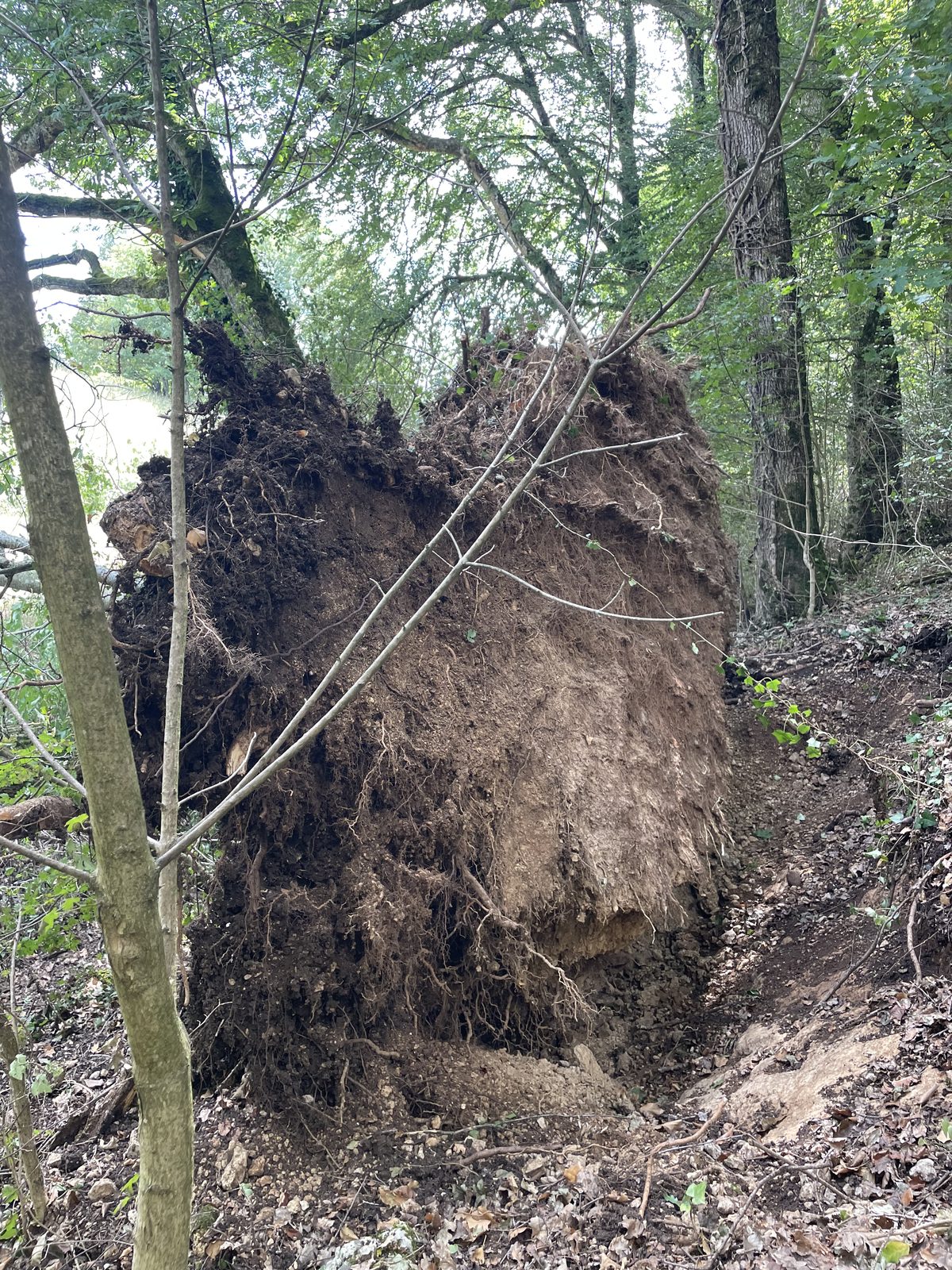
The yellow signs led us onto a forest trail, far above any vineyard. Once, a fallen tree blocked the path and we had to retrace our steps. Another time, we pushed through shrubs to scramble over a recently fallen trunk. I sensed my husband's good mood fall and his frustration rise, so I quietly followed the steep ascent, hoping to crest the hill soon. At one point, he asked for my phone, opened the SwitzerlandMobility app, counted the elevation lines and announced that we had three more to go. A fourth elevation line, and I think he would have turned back...
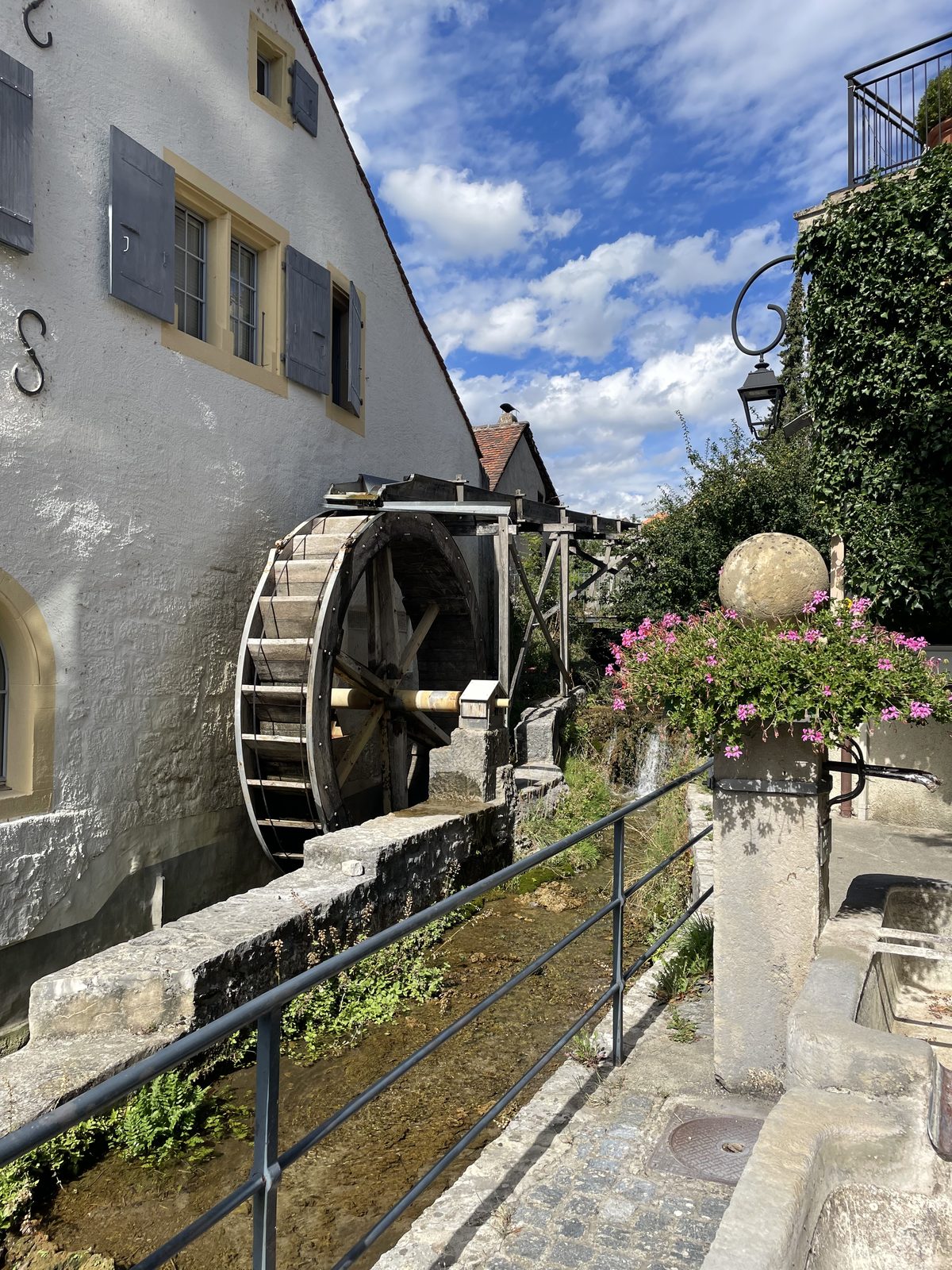
Saint-Blaise rewarded us! Narrow lanes, medieval houses, wooden water wheels and a mossy stream running down to the lake: it felt like stepping into a fairytale storybook. The yellow diamond had taken us there after all. It simply had not taken us the way I had assumed.
A reward by the lake
We reached the lakeshore and plopped ourselves down at a buvette, a little stand selling drinks, ice cream and other snacks. Families were settled on the vast lawn to cool off on another warm day, and I envied the people swimming. I had forgotten my bathing suit! After a cool and delicious beer, we treated ourselves to soft ice cream (mine sprinkled with hazelnuts) and walked to the train station. Seven minutes later, we were back in Neuchâtel, where I grabbed my suit and went straight to the lake for a blissful swim.
Too tired to walk into town for dinner, we settled on drinks and sushi at the hotel's rooftop bar. It turned out to be an excellent decision: we sat outside, sipping our drinks and watching the sun set over the lake.
Last day: shipping a package home
On our last day, we had to send a package home with gifts, food and books. I had sent boxes back home before and knew what to expect. First grab a number and wait for it to appear with the counter letter. While waiting, choose the correct shipping box: samples of each size are on display.
I find that it is worth paying an extra CHF 5 for the postal employee to fill out the necessary forms and explain the ever-changing shipping rules between Switzerland and the United States. We could send a box as a gift or as a commercial package. As a gift, the contents may be worth no more than CHF 80, but there is no longer a weight limit. As a commercial package, there is no value limit, but the recipient pays an import duty. Either way, every item must be listed, and some are not allowed at all, such as alcohol and batteries.
That CHF 80 limit goes fast. Six pairs of slippers decorated with the Swiss flag, at CHF 9.90 a pair, nearly used it up on their own! At the Neuchâtel post office, we could only pay in cash, so come prepared. And it is useful to have a sender's address in Switzerland. Luckily, I can use my mother's address.
Deep dive: the lace-makers of Neuchâtel
Schmid, a tea room and bakery in the heart of Neuchâtel's historic center, sits right across from the Payot bookstore. These are two of my favorite places whenever I am in town. Schmid serves excellent coffee, pastries and small savory dishes, with comfortable seating inside and out. I see the same waitresses year after year. I love spending time there reading the local newspapers: I catch up on the news and often discover something new about the region. This time, I read a fascinating article about the history of lace. Long before Neuchâtel became famous for its watches, it was famous for its bobbin lace, la dentelle aux fuseaux.
The lace-maker crossed and twisted dozens of threads wound on small wooden bobbins over a pattern pinned to a pillow. The result, in linen or silk (silk lace was called blonde), was delicate, labor-intensive and prized by European high society from the 17th century onward. Lace was already made here in the 1500s. Huguenot refugees fleeing France in the late 17th century are often credited with bringing it, but they more likely brought new techniques and patterns to a craft that already existed.
This was a women's industry. Thousands of women worked from home, in the Val-de-Travers and the mountain towns of Le Locle and La Chaux-de-Fonds, for merchants who supplied the thread and patterns and collected the finished pieces. At its height, lace-making employed five or six times more people in the region than watchmaking. And here is the part that speaks to the anthropologist in me: the lace was a luxury for aristocrats, but the women who made it were poorly paid. Still, for many rural families, it was income a woman could earn without leaving her village.
From the 1830s, machine-made lace from England, falling prices and changing fashions brought the industry down. As lace declined, watchmaking grew, built in part on the trading networks the lace merchants had created.
Today, Neuchâtel lace survives as a living craft. Local lace-makers' groups give demonstrations and courses, and you can see historic pieces at the Château de Valangin, the Musée paysan et artisanal in La Chaux-de-Fonds and the regional museum of the Val-de-Travers. Looking at old lace in a museum means so much more once you know the story of the women behind it.
Good to know
Getting around
- Zurich to Neuchâtel: about 90 minutes by train.
- From Neuchâtel: Noiraigue (for the Creux du Van) is about 20 minutes by regional train, Cressier about 15 minutes, and Saint-Blaise about 7 minutes. A little tram runs to Auvernier.
Hiking the Creux du Van
- The route: the Sentier des 14 Contours starts about ten minutes from Noiraigue station (take the right fork). It took us about two hours to reach the rim. The full loop via Le Soliat and Ferme Robert is roughly 12 km (7.5 miles) with 700 to 800 meters (about 2,300 to 2,600 feet) of climbing. Plan a full day.
- Equipment: sturdy boots and hiking poles. The descent includes a white-red-white mountain-trail section that is narrow and rocky, especially after rain.
- At the rim: there is no barrier between you and the cliffs. Stay well back from the edge.
- Noiraigue station: the toilets cost CHF 1, payable digitally only, or get a pass at the station shop. The shop closes before 5 p.m.
- Le Soliat: open from April to early November. Pay in cash, know your order before you reach the counter, and take a number. Dormitory beds are available.
- Ferme Robert: meals and dormitory overnights in a historic farm. Check opening days before you go, as mountain farms close progressively in autumn.
Wine
- Tastings: many Swiss wineries offer tastings only for groups, on certain days, or outside the harvest. Book ahead, and expect to buy a bottle or two.
- The vititour in Cressier: two loops through the vineyards with 27 information signs. Best on foot.
- Harvest festivals: wine regions hold Fêtes des Vendanges each autumn, and Neuchâtel's own is a big one. Dates vary, and harvests now start earlier because of warmer temperatures, so check before you go.
Shipping a package home
- Pay the extra CHF 5 for help at the counter; the rules change often.
- As of September 2026, a gift package to the U.S. could hold up to CHF 80 in value. Commercial packages have no value limit, but the recipient pays import duty.
- No alcohol or batteries. Every item must be listed.
- The Neuchâtel post office accepted cash only, and you need a Swiss sender address.
Prices and rules as of September 2026.